


Empty.
That’s the word that popped into my head as I tried to characterize what I had just read.
“Empty what?” you ask.
The rebuilding plans of God’s people.
Why “empty”?
To develop the introduction to this essay, I spent some time looking through the revitalization programs promoted by the largest Protestant denominations in America—Southern Baptists, Presbyterians, Methodists.
They’re all very impressive.
They all have catchy names, like “Vital Congregations Revitalization Initiative,” “Revitalization and Replanting,” and “Futuring Church.”
They all have beautiful logos, professional websites, and lots of downloads.
And they all trade in polished revitalization jargon. They “empower leaders,” grow “vibrant churches,” and promote “transferable principles.”
Early Access Note: At launch, long-form essays are available in full; future essays will be reserved for paid subscribers, who will also receive the full audio edition and printable PDF.
Consider this example from the Presbyterian Church USA’s Vital Congregations Initiative:
The purpose of the [program] is to work alongside leaders of existing congregations continually assessing, discerning, and living into faithful actions that increase vitality through intentional spiritual practices that take them deeper into following Jesus Christ.1
Do you see the emptiness here?
They “assess” and “discern”—based on what exactly?
They “live in faithful actions”—faithful according to whom?
They engage in “intentional spiritual practices”—don’t Buddhists and Muslims do the same?
Each program mentions the Bible, to be sure. But when you look closely, you realize it’s only window-dressing.
The real foundation is strategic management theory and corporate philosophy. They speak of “leadership pathways,” “deeper collaboration,” and “vision, purpose, and values.”2
What never seems to make it into their discussions, however, is sin, rebellion, and repentance.
They declare that renewal must be based on “God’s Word,” but few of their principles, methods, or recommendations come from it.
Like I said, empty.

Premium Resources for Paid Subscribers
Voiceover of Full Essay (via Podcast)
Printable PDF (download below)

A Helpful Contrast: Nehemiah’s Approach
This second essay in our four-part series examines how men in the Bible rebuilt God’s kingdom, focusing specifically on the great reformer Nehemiah.
Essay 1 laid the groundwork by explaining the reason for Nehemiah’s return to Jerusalem, namely, to rebuild the city wall that Nebuchadnezzar had destroyed 140 years earlier.
It then shed light on the deteriorated state of American churches by drawing parallels between their condition and that of Jerusalem upon Nehemiah’s arrival.
We now shift from historical context and spiritual parallels to revitalization strategy: What can we learn from Nehemiah’s approach as we seek to rebuild churches today?
Is there a process revealed in his actions that we can follow to replicate his success?
Indeed, there is.
A careful study of his book highlights the steps necessary for taking on a spiritual rebuilding effort, what I call the Nehemiah Strategy. These steps are as follows:
Step 1: Assess the disobedience
Step 2: Teach to correct the disobedience
Step 3: Lead change in keeping with righteousness
Step 4: Correct the rebellious
Let’s begin with Step 1: Assess the disobedience.
In this essay:
Step 1: Assess the disobedience
The first thing Nehemiah did upon arriving in Jerusalem was survey the condition of the wall itself. His inspection is recorded in 2:12-13:
Then I arose in the night, I and a few men with me; I told no one what my God had put in my heart to do at Jerusalem….
And I went out by night through the Valley Gate to the Serpent Well and the Refuse Gate, and viewed the walls of Jerusalem which were broken down and its gates which were burned with fire.
Nehemiah was wise enough to know he could not repair a wall he had never seen. So, a few days after he arrived, he went out and took stock of it himself.
This survey supplied the critical information he needed to lead the rebuilding effort. It identified priority areas, clarified the necessary repairs, and enabled efficient resource allocation.
Without this initial step, the effort would have been characterized by disorder, squandered resources, and limited results.
Surveying the Walls of Our Churches
Our task must begin here as well. We must conduct a thorough inspection of the spiritual condition of our churches, evaluating their structure, processes, and conduct through the lens of Scripture.
Our central concern must not be what corporate strategists or management consultants see when they look at us. It must be what God sees.
And what does he see?
J. I. Packer, in his volume A Passion for Faithfulness: Wisdom from the Book of Nehemiah, characterized the Lord’s perspective like this:
Most of us are more like the lukewarm Laodiceans, drifting along very cheerfully in becalmed churches, feeling confident that everything is all right, and thereby disgusting our Lord Jesus, who sees that, spiritually speaking, nothing is right.3 [emphasis added]
I could not agree more. When the full teachings of the New Testament are taken into account, the doctrine, structure, and practice of the typical American church are found deficient in every respect.
Modern revitalization programs say renewal must be based on “God’s Word,” but few of their principles, methods, or recommendations come from it.
So what precisely is wrong?
Every church has its own particular issues, and pastors must seek to identify them carefully. But in my experience, the most common problems preventing renewal in American churches fall into four categories.
Problem 1: Doctrinal faithfulness to the Bible
God’s people have compromised or abandoned doctrines foundational to the faith and essential to the moral and social well-being of society. This lack of fidelity takes two primary forms.
A rejection of the authority of Scripture itself
Many Christians simply do not believe the Bible is accurate, relevant, and authoritative.

A rejection of specific truths related to time and culture
Denying the Bible’s authority means dismissing its unpopular teachings, including:
Salvation through Christ alone
The superiority of the Christian religion
Marriage, gender, and sexuality
Moral issues, such as abortion, gambling, drug legalization, and assisted suicide
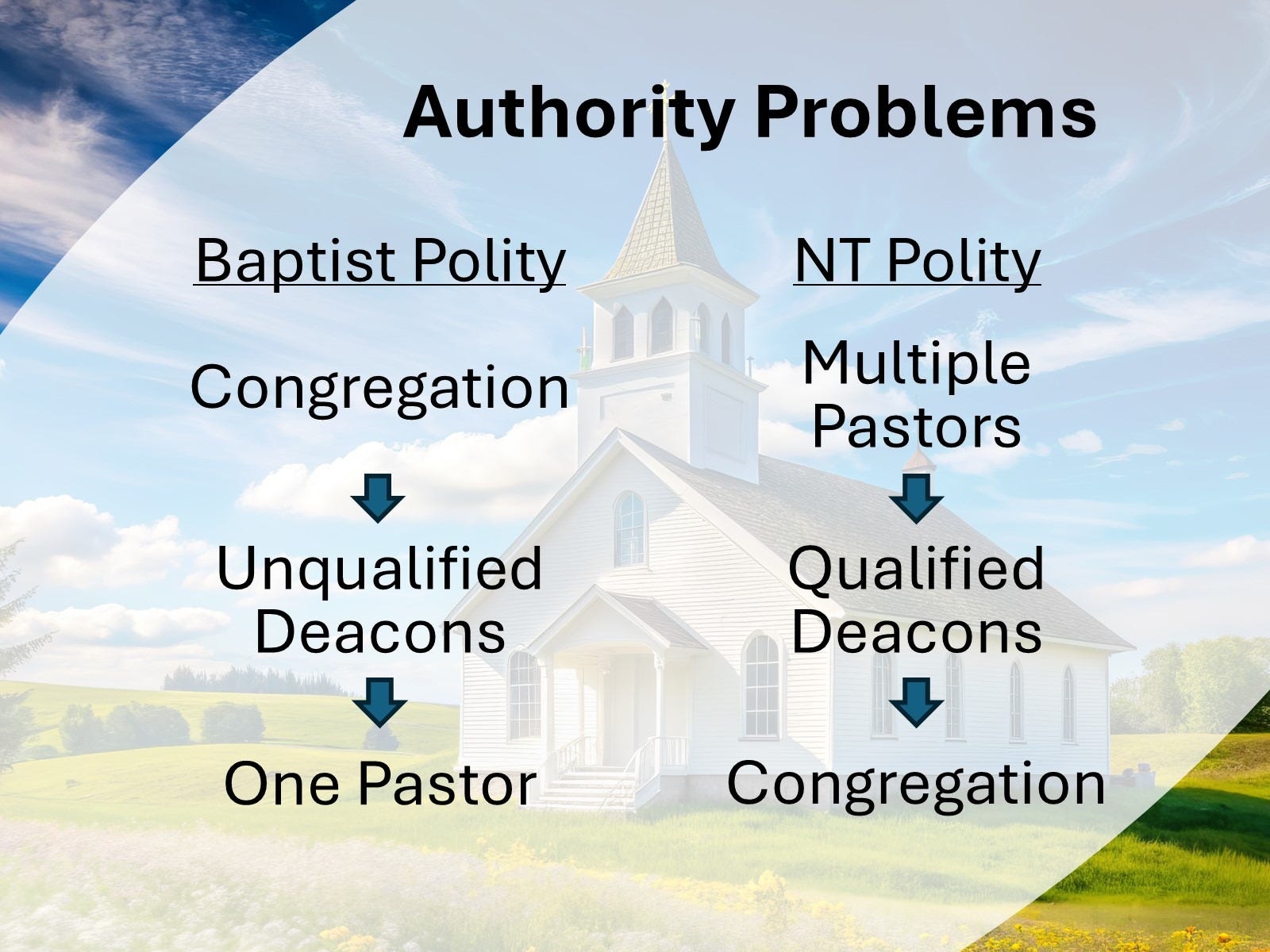
Problem 2: Authority and decision-making structure
Churches have set aside the organizational and leadership structure prescribed by the New Testament. Common errors include:
A single pastor over a church
Pastors who do not meet the biblical qualifications
Women and homosexuals as pastors
Congregational voting
Problem 3: Spiritual immaturity and wickedness among the membership
American believers have drifted far from the moral standards of Christ for his people. Among others, their common sins include:
Complaining, backbiting, and sowing discord
Sexual sins including pornography, fornication, and homosexuality
Lust for power and control
Problem 4: Evangelism and mercy work for the poor and oppressed
Most Christians refuse to do any type of evangelism, churches engage in little to no outreach, and pastors ignore the command to regularly engage the lost (2 Tim. 4:5).
Moreover, churches all but ignore the needs of the poor, doing little more each year than donating a few canned goods to a local food drive.
And ministries to the oppressed, like prostitutes, trafficked children, and drug addicts, are practically non-existent.
God’s people have compromised or abandoned doctrines foundational to the faith and essential to the moral and social well-being of society.
Step 2: Teach to correct the disobedience
Nehemiah’s work did not end with a survey of the damage. Once the scope of the problem was known, he immediately set out to fix it.
Just after returning from his inspection, he called the people together, explained the situation, and shared his plan to rebuild.
His words, and the people’s response, are recorded in 2:17-18:
“You see the distress that we are in, how Jerusalem lies waste, and its gates are burned with fire.
“Come and let us build the wall of Jerusalem, that we may no longer be a reproach.”
And I told them of the hand of my God which had been good upon me….
So they said, “Let us rise up and build.”
By the next chapter, the people had taken their places all along the wall, and the rebuilding was fully underway.
Spiritual Issues Manifested
Nehemiah soon realized that it was not just the walls that needed to be repaired but the spiritual condition of the people as well.
Numerous sins came to light as the work unfolded, including:
Laziness and apathy (3:5)
The oppression of the poor by the wealthy (5:1-13)
Failing to keep feasts prescribed by the Law (8:13-18)
Later in the book, after the wall had been completed and order restored, Nehemiah left for a season and returned. Upon his return, even more sin came to light, like:
Mingling with Ammonites and Moabites (13:1-3)
Selling on the Sabbath (13:15-22)
Marrying Gentile women (13:23-27)
Spiritual Issues Addressed
Nehemiah dealt with these sins in various ways, but his methods always included reminding the people what the Law of God said.
When responding to the oppression of the poor (5), he demanded that the charging of usury and selling of Jews as slaves stop immediately in keeping with the Law (Exo. 22:25-27 and Lev. 25:39-42, for example).

Later, after the wall was complete, he gathered the people together so Ezra the priest could “read from [the Law] in the open square…from morning until midday” (8:3).
He even had the Levites “help the people to understand the Law, [give] the sense, and help them to understand the reading” (8:7-8).
Nehemiah’s efforts were not confined to rebuilding the wall; they also aimed at renewing the people through the ministry of the Word.
A Pattern for Us
This precedent reveals the next step in reviving our churches today: apply the Word to the sins of the people.
The issues revealed in our inspection must now be addressed with Scripture. But how do we address them? Through preaching and teaching.
We must be reminded of the power of God present in the preaching and teaching of his Word. Consider a few verses that substantiate this:
Isaiah 55:11, So shall My word be that goes forth from My mouth; it shall not return to Me void, but it shall accomplish what I please.
Hebrews 4:12, For the word of God is living and powerful, and sharper than any two-edged sword.
John 17:17, Sanctify them in the truth; your word is truth.
The obstacles to renewal in our churches may seem overwhelming, but they are not beyond the power of the Word of God. Therefore, our central strategy to overcome them must be the faithful preaching and teaching of biblical truth.
What to Address First
Before we leave this section, let me say a word about which issue or issues to address first.
We must prioritize the issues that inflict the greatest damage or most impede change.
That means dealing with doctrinal faithfulness and the church’s authority and governance structure before anything else (Problems 1 and 2 from our prior list).
Doctrinal Faithfulness
Doctrinal error lies at the root of every other problem. When confidence in the accuracy and authority of Scripture erodes, we invite error of every kind.
Before progress can be made elsewhere, we must rebuild this foundational conviction.
Authority Structure
Moreover, our ability to maintain peace in our churches, implement necessary change, and minister effectively to our communities depends directly on the authority and decision-making structure we adopt.
I have written extensively on the impact of structure on my main website. Let me simply say now that the unbiblical structures most churches use allow Satan to easily infiltrate, control, and destroy them.
After doctrinal fidelity is addressed, structure must be next on our list.
The obstacles to renewal in our churches may seem overwhelming, but they are not beyond the power of the Word of God.
Step 3: Lead change in keeping with righteousness
Teaching, however, was not the final step in Nehemiah’s process. He followed instruction with decisive action, implementing changes that corrected the problems he had identified. Consider a few examples:
Oppressing of the poor (5:1-18): He required the wealthy to return the interest and property they had taken and to enter into a covenant not to do it again.
Failing to keep feasts (8:13-18): He led an effort to reinstate the Feast of Tabernacles, which had not been observed since the time of Joshua.
Selling on the Sabbath (13:15-22): He ordered the gates to be closed on the Sabbath and posted guards to prevent the transport of products into the city.
Teaching Must Lead to Action
As we identify areas where our churches are not in line with the Bible, our response cannot end at preaching and teaching about them.
We must lead our people to put away error and walk in obedience.
This is precisely what Scripture requires of leaders.
In Titus 1:5, Paul instructs Titus to “set in order the things that are lacking.” The Greek term translated “set in order” is epidiorthoo, a compound word meaning “to position straight.”
Titus’s task, as a man of God, was to “set things straight,” to lead the people to align their beliefs and practices with God’s will. That is our task as well.
A Common Mistake
While this may seem obvious, many preachers fail to make the connection. They preach on important issues but expect the people to figure out what must change and act on it themselves.
But sheep do not reform the flock. God has given that responsibility to shepherds.
Some Ideas for Driving Change
Here are some examples of how you might lead change in the four problem areas we discussed previously.
Doctrinal faithfulness. Draft a doctrinal statement addressing areas of concern and lead the church to adopt it.
Authority and decision-making structure. Speak to the deacons and influential members about changing the church’s structure. [Wes resources.]
Spiritual immaturity and wickedness. Hold the people accountable to righteous conduct by calling out immature, wicked behavior.
Evangelism and mercy work. Conduct an outreach or apologetics event, or invite someone from a homeless or addiction ministry to speak at your church.
Sheep do not reform the flock. God has given that responsibility to shepherds.
Step 4: Correct the rebellious
While many followed Nehemiah’s lead willingly, there were some who resisted his efforts no matter what.
Some would not work (3:5b)
Some mocked and attacked workers (4:1-7)
Many complained (4:10)
The rich took advantage of the poor (5:1-5)
Merchants dishonored the Sabbath (13:15)
Jews married Gentiles (13:23)
Still More Required
Organizing, teaching, and leading was not enough to finish the great task he had been given. At some point, he had to take on those who rebelled against his authority and demand their compliance.
He did not shy away from this aspect of leadership. In chapter 13 alone, he took the following actions:
Threw Tobiah’s property out of the Temple (8)
Contended with rulers and nobles (11, 17)
Warned merchants (15c)
Threatened physical confrontation (21)
Cursed, hit, and pulled out the hair of several men (25)
A Responsibility of Contemporary Shepherds
Our efforts to change our churches will result in rebellion among some of our people.
There will be those who, no matter how much we teach, how long we wait, or how much we pray, will simply not submit to our authority and work with us to move the church forward.
In these cases, we must correct them decisively and directly.
The New Testament gives us this right and, in fact, commands that we do it. Consider these verses:
2 Timothy 4:2 – Paul said to “convince, rebuke, [and] exhort, with all longsuffering and teaching.” The word “convict” is elgcho, meaning “to reprehend severely,” and “rebuke” is epitimao, “to censure severely.”
Titus 1:13 – Speaking of troublemakers, Paul instructed Titus to “rebuke them sharply, that they may be sound in the faith.” “Rebuke them sharply” combines elgcho (see previous) and apotomos, “severely.” Essentially, “Severely reprehend them severely.”
Titus 2:15 – Paul told Titus to “rebuke [elgcho] with all authority.” Here, Paul grants permission to rebuke in a broader sense, whenever the need arises.
Practical Application
What does this mean for us in a practical, day-to-day sense?
It means that after gently instructing a troublemaker and warning him a second time when his rebellion persists, we must then act firmly and forcefully, exercising the full authority of our office to confront his sin and command him to repent.
Think of this as a stern father laying down the law with a rebellious child. Our attitude and demeanor must change from a gentle shepherd to an unyielding judge.
And then, if his rebellion continues, we must promptly carry out the discipline Jesus prescribed in Matthew 18:15-18.
There will be those who, no matter how much we teach, wait, or pray, will not submit to our authority and work with us to move the church forward.
Conclusion
At the beginning of this essay, I noted that today’s revitalization strategies are often grounded in management theory rather than Scriptural wisdom.
Nehemiah models the opposite approach, placing God’s Word, not human ideas, at the center of his rebuilding efforts.
His actions reveal a four-step process we can follow in rebuilding our churches: assess disobedience, teach the Word, lead change, and correct the rebellious.
Yet even when this process is faithfully applied, resistance will arise from within.
In the next essay, we will examine the opposition Nehemiah faced and consider how pastors confronting similar resistance today can overcome it.
NOTES:
Vital Congregations Revitalization Initiative, Presbyterian Church (U.S.A.), 23 Mar. 2018, https://pcusa.org/resource/vital-congregations-revitalization-initiative. Accessed 11 Feb. 2026.
The concern here is not with strategic management theory and corporate philosophy themselves, but with elevating them to a governing framework for church renewal. Such tools may serve the church, but they must never supplant the authority of Scripture or the wisdom it provides.
J. I. Packer, A Passion for Faithfulness: Wisdom from the Book of Nehemiah (Wheaton, IL: Crossway Books, 1995), 33.