

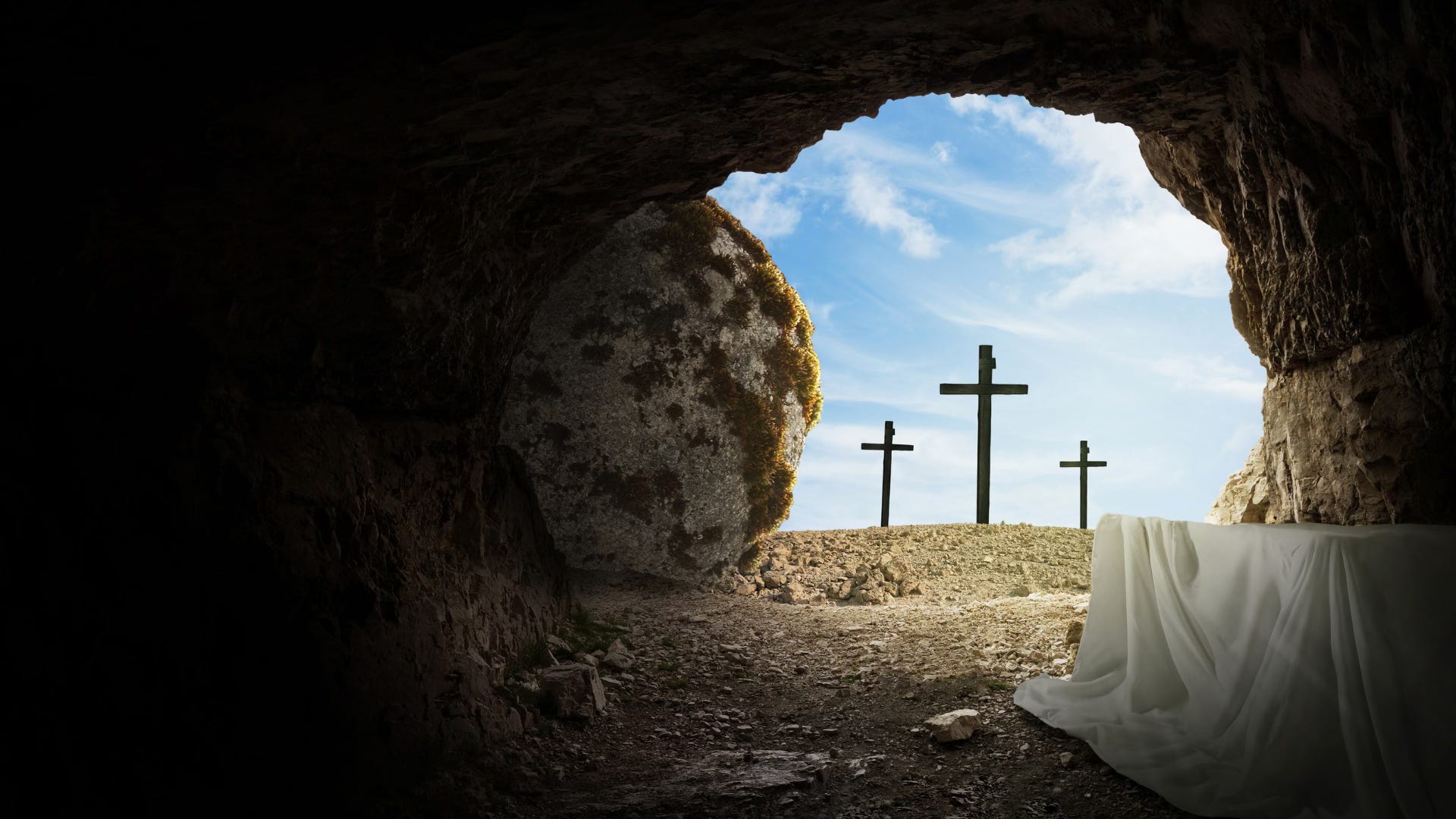
The Resurrection is central to the entire Christian faith. If Jesus was not resurrected, he can’t be God or the Savior of mankind, and Christianity becomes a crumbling house of cards. However, if he was…well, you know what that means.
As you can imagine, every aspect of the Resurrection has been criticized, yet millions still believe. Why? Because the objections do not overcome the powerful evidence that supports the claim that Jesus Christ was indeed raised from the dead.
Here are brief answers to the top three objections to the resurrection of Jesus Christ.
1. Jesus never died
Remember, he was scourged before he was crucified. This cruel, bloody beating made him too weak to even carry his own cross (Mark 15:21).
Just after he died, soldiers pierced his side with a spear, releasing blood and water, a clear sign of death (John 19:34). And, after he was taken off the cross, Pilate, the Roman governor, sent soldiers to confirm his death (Mark 15:44).
This evidence works against the claim that Jesus never died.
2. The disciples stole the body
If so, the body was never found, though his enemies would certainly have searched for it. All they would have had to do to end Christianity forever was to produce the body. Yet they never did.
Moreover, Pilate set a guard to make sure it could not be stolen. At the urging of the Jewish leaders, he ordered:
“You have a guard; go your way, make it as secure as you know how” (Matthew 27:62-66).
Again, the evidence does not support the assertion that the body was stolen.
3. The disciples fabricated the resurrection story
If they did, they knowingly taught and died for a lie. You may die for a lie you believe to be true, but you would never die for a lie you know to be a lie.
New Testament scholar J.P. Moreland had this to say about what the disciples endured to maintain their belief that Christ was resurrected:
And they were willing to spend the rest of their lives proclaiming this, without any payoff from a human point of view….
They faced a life of hardship. They often went without food, slept exposed to the elements, were ridiculed, beaten, imprisoned.
And finally, most of them were executed in tortuous ways.”1
One man may do this, though even that is highly unlikely. But twelve?
What do we conclude?
Objections to Jesus’ resurrection abound. But, when closely analyzed, they are not as convincing as critics claim.
The top three—that he never died, that the disciples stole the body, and that the disciples made up the resurrection—simply do not make any sense.
The conclusion? Jesus was crucified, died, and rose again the third day, just like the Scriptures say.
NOTES:
Lee Strobel quoting J. P. Moreland in The Case for Christ (Grand Rapids: Zondervan, 1998), 333